The idea of traveling with your little one can feel overwhelming, especially the first time you venture beyond your usual routine. Between feedings, naps, diaper changes, and a mountain of gear, it is natural to wonder whether a trip is even worth the effort. The good news is that with a little planning, traveling with a baby can be smooth, joyful, and far less stressful than you might expect.
Whether you are taking a short road trip to visit family or boarding a long flight for a proper vacation, this guide walks you through everything you need to prepare. You will find practical tips on what to pack, how to travel safely by car and plane, and how to keep feeding and sleep on track while you are away from home.
Planning Ahead for a Smooth Trip
A successful trip with a baby starts long before you leave the house. The more you prepare, the more relaxed you will feel when travel day arrives.
Begin by thinking through the basics of your destination and route:
- Choose baby-friendly timing: When possible, plan travel around your baby’s natural rhythm. Departing near a nap window can encourage your little one to sleep through part of the journey.
- Research your destination: Confirm that your accommodation can provide a crib or has space for a travel cot. Note the nearest pharmacy and pediatric clinic in case you need supplies or care.
- Pack a little extra time: Everything takes longer with a baby. Build in buffer time for diaper changes, feeds, and unexpected meltdowns so you are never rushing.
- Consider travel protection: For bigger trips, a policy that covers your family can offer peace of mind if plans change or a small one gets sick. Providers like Travelex Insurance offer plans designed with families in mind.
If you are flying internationally, remember that your baby will need their own passport. Apply well in advance, since processing can take several weeks.
What to Pack: The Baby Travel Checklist
Packing for a baby is a balancing act between being prepared and not overloading yourself. Focus on the essentials, and remember that most baby items can be bought at your destination if you forget something.
Diapering and Changing
Keep a well-stocked changing kit within easy reach for the journey itself:
- Enough diapers for travel time plus a few extra
- Travel pack of wipes and a small tube of barrier cream
- Portable changing pad
- Sealable bags for soiled clothes and diaper disposal
- One or two changes of clothes for your baby
A roomy, well-organized diaper bag makes all the difference on the go. You can find packable changing kits, diaper bags, and travel-sized accessories at buybuy BABY , which carries a wide range of feeding and diapering gear. For more on building your day-to-day kit, see our guide to newborn baby essentials .
Feeding Supplies
What you pack depends on how your baby eats. Whether you breastfeed, bottle-feed, or have started solids, plan for more than you think you will need:
- Bottles, formula, and an insulated bag if you are formula feeding
- A nursing cover if you prefer privacy while breastfeeding
- Pre-portioned snacks or pouches for older babies on solids
- Bibs, a couple of spoons, and a spill-proof cup
Our complete guide to baby formula includes helpful tips on traveling with formula and keeping it safe.
Clothing and Comfort
Pack layers so you can adjust to changing temperatures on planes, in cars, and at your destination. Bring a familiar comfort item, such as a favorite blanket or soft toy, to help your baby feel secure in a new environment. A lightweight muslin can double as a sunshade, burp cloth, and nursing cover.
Traveling by Car with Your Baby
Road trips give you flexibility to stop whenever your baby needs a break, but they require a few safety basics to get right.
The most important item is a properly installed, age-appropriate car seat. Never compromise on this, even for short trips. Review our detailed walkthrough on the proper installation of infant car seats before you set off.
A few tips to make long drives easier:
- Plan regular stops every two to three hours so your baby can stretch, feed, and have a diaper change.
- Sit beside your baby when another adult is driving, so you can soothe and monitor them.
- Use a backseat mirror to keep an eye on a rear-facing baby without turning around.
- Keep the cabin comfortable with a window shade to block direct sun and protect delicate skin. Our post on protecting your baby from sunburn has more on shielding little ones from UV rays.
- Pack a day bag with everything you need within arm’s reach, rather than buried in the trunk.
If you are shopping for a travel system that pairs an infant car seat with a stroller base, retailers like Albee Baby offer a wide selection of car seats, strollers, and matching travel systems to suit different budgets.
Flying with a Baby
Air travel with a baby is often less daunting than parents fear. Babies frequently sleep through flights, and airline staff are usually happy to help families.
Booking and Boarding
Most airlines allow infants under two to fly on a parent’s lap, though purchasing a separate seat for an approved car seat is the safest option. When booking, ask about bassinet availability on long-haul flights and request bulkhead seating for extra space.
Many airlines offer priority or family boarding, which gives you time to settle in before the rush. Some parents prefer to board last so an active baby has less time confined to the seat. Choose whichever suits your little one’s temperament.
Easing Ear Pressure
Changes in cabin pressure during takeoff and landing can be uncomfortable for tiny ears. Offering a feed, a bottle, or a pacifier during ascent and descent encourages swallowing, which helps relieve the pressure. Staying calm and close will reassure your baby if they become fussy.
Getting Through the Airport
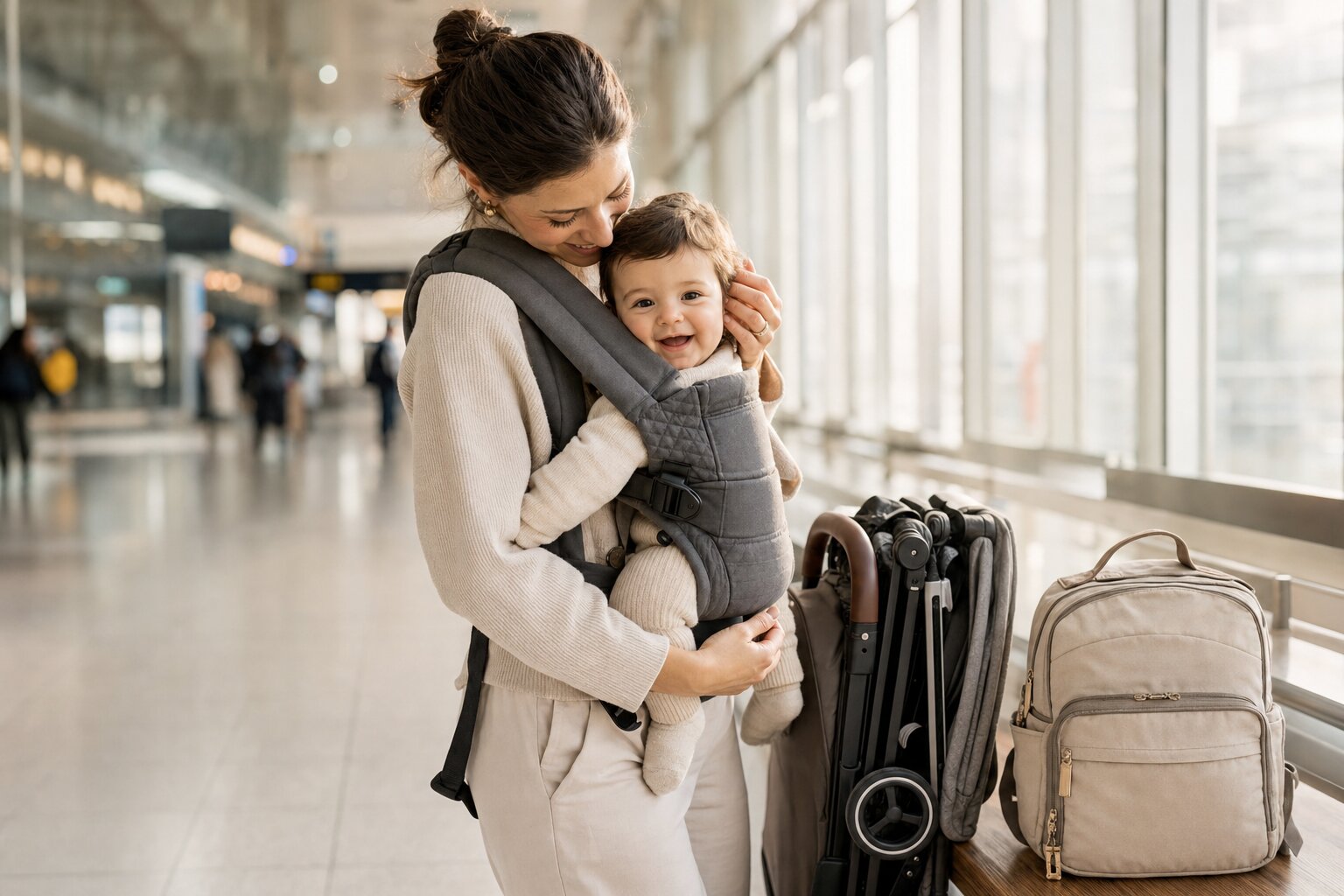
Navigating a busy airport is far easier when your hands are free. A comfortable, ergonomic baby carrier lets you move through security and crowds while keeping your baby close and content. Carriers from brands like Ergo Baby are designed for extended wear and supportive positioning. For guidance on wearing your baby safely, see our safety guidelines for babywearing .
A lightweight, compact stroller that folds quickly is also invaluable for moving through terminals and gate-checking at the door. You can compare travel-friendly strollers and gate-check bags at Pish Posh Baby .
Keeping Feeding on Track Away from Home
Maintaining familiar feeding routines helps your baby feel settled in unfamiliar surroundings. Try to offer feeds at roughly the same times you would at home.
A few things make feeding on the road simpler:
- Carry ready-to-feed formula in single-serve portions to avoid measuring and mixing on the go.
- Ask for hot water at cafes or from flight attendants to warm bottles when needed.
- Pack mess-free snacks like teething biscuits or fruit pouches for older babies.
- Stay hydrated yourself if you are breastfeeding, since travel days can be long and tiring.
Do not worry if your baby eats a little differently while traveling. Appetites often shift with excitement and routine changes, and things usually settle once you return home.
Managing Sleep on the Go
Sleep is often the biggest worry for traveling parents, but a few strategies can help your baby rest well in a new place.
Recreate familiar sleep cues wherever you are:
- Bring your baby’s usual sleep sack, white noise machine, or comfort item.
- Stick to your normal bedtime routine, such as a feed, a song, and dimmed lights.
- Block out unfamiliar light with a portable blackout cover or even a dark blanket over the travel cot.
- Keep the sleep space safe by following the same firm, flat, clutter-free surface rules you use at home.
For a refresher on building consistent routines, our ultimate guide to baby sleep tips is a helpful companion before any trip.
Expect a little disruption, especially across time zones, and be patient as your baby adjusts. Most little ones return to their normal pattern within a few days of getting home.
Staying Healthy and Safe While Away
A few simple habits keep your baby comfortable and well throughout your travels:
- Pack a small first aid kit with infant pain reliever, a thermometer, saline drops, and any prescribed medications.
- Practice good hand hygiene and wipe down tray tables, armrests, and high-touch surfaces.
- Protect delicate skin with shade, breathable clothing, and a hat in sunny climates.
- Keep your baby cool or warm as needed, since car seats and carriers can trap heat.
If your baby develops a fever or seems unwell while away, trust your instincts and seek local medical care. Knowing the location of the nearest clinic ahead of time, as suggested earlier, makes this far less stressful.
Final Thoughts
Traveling with a baby does take extra preparation, but it also creates wonderful memories and shows your little one the world beyond home. With a thoughtful packing list, the right gear, and realistic expectations, you can handle road trips and flights with confidence.
Go easy on yourself if everything does not go perfectly. Babies are adaptable, and so are you. Pack what you need, build in plenty of time, and focus on enjoying the adventure together. Safe travels!